


10 Practical Actions for Traffic and Search Visibility in the AI Era.

Quick Summary of Contents
- 1 1. Domains Still Matter, but Only When Paired With Real Use
- 2 2. Build a Site Architecture AI Can Understand Instantly
- 3 3. Write for Humans First, AI Second, and Crawlers Last
- 4 4. Use Multimodal Content as a Traffic Engine
- 5 5. Internal Linking Is Your New SEO Superpower
- 6 6. External Links Matter Less, but Mentions Matter More
- 7 7. Social Media Isn’t Just Distribution Anymore. It’s Discovery.
- 8 8. Analytics Has Changed Forever. Measure What Actually Matters.
- 9 9. Marketing Automation Must Feel Human Again
- 10 10. What Always Worked Still Works: Be Useful, Be Clear, Be Trustworthy
- 11 A Modern, Practical Checklist for AI-Search Era
- 12 Thoughts Moving Forward…
When I wrote “108 Actions To Increase Website Traffic and Search Rankings” back on December 30, 2014, nobody was asking how to rank in AI Search.
Google wasn’t summarizing half the internet in a single answer. Bing wasn’t rewriting queries with GPT-powered understanding. And nobody was thinking about whether their content was training someone else’s model more than attracting their next customer.
Yet here we are.
Search is changing faster than any algorithm update we have survived in the last decade. What used to be a world of keywords and blue links is now a world of answers, summaries, citations, verified sources, brand signals, and multimodal experiences.
The question is no longer “How do I rank?” but “How do I stay visible when AI answers first?”
So, consider this the 2025 remix. The same practical spirit as the original 108-point checklist, but rebuilt for a world where LLMs, SGE, synthetic search, and user intent all compete for the exact moment of attention.
Below is what still matters, what no longer matters, and what matters more than ever.
1. Domains Still Matter, but Only When Paired With Real Use
Domains still matter in 2025, but only when backed by real substance. A decade ago, keyword domains and microsites were easy wins for small businesses. Not anymore—microsites only work now if they deliver genuine depth and value.
What’s still effective? Buying strong, brandable domains and acquiring aged ones with clean histories. Redirecting or rebuilding legacy domains works too, but only with real content and purpose behind them. What’s dead? Building microsites purely to rank thin content, or buying expired domains in hopes of inheriting SEO value. AI search doesn’t care about a domain’s history unless there’s actual substance there.
The play now is simple: if you buy a domain, develop it properly with topical depth, structured content, and real usefulness for humans. And unless you can maintain a whole content ecosystem, stick with subfolders on your main site instead of spinning up separate microsites. Quality and coherence beat quantity and keywords every time.
2. Build a Site Architecture AI Can Understand Instantly
AI search doesn’t crawl your site the way it used to—it reads it as a human would. That means your site architecture needs to make sense instantly.
Focus on a clean, logical structure that creates a clear topical graph, paired with fast hosting that delivers globally. Keep your code compact, compress your assets, and use first-party analytics since privacy actually matters now. Make sure you have automatic XML sitemaps that stay current and strong internal linking that shows how your pages relate to each other.
The basics still count: SSL certificates, schema markup, and responsive design aren’t optional. But you can retire some old tactics—image sprites, social-login integrations for SEO purposes, and manually submitting URLs to search engines are all unnecessary now.
Here’s what’s critical today: add structured data that AI answer engines can confidently pull from. Build content hubs instead of scattering individual posts all over your site. And weave first-person expertise signals throughout your content to strengthen your E-E-A-T. AI needs to see that real experts with real experience are behind what you’re publishing.
3. Write for Humans First, AI Second, and Crawlers Last
“Write for humans first” used to be a nice philosophy. Now it’s non-negotiable. AI doesn’t care about keyword density—it ranks clarity, usefulness, and relevance. It rewards content that answers real questions completely, without making people click elsewhere.
Keep doing what works: write with specificity, use stories and real examples from lived experience, refresh your content regularly, and craft tight title tags with compelling descriptions. But stop the old-school tactics—keyword stuffing, chasing arbitrary word counts, publishing filler just to hit volume goals, and hiring writers who simply rewrite AI output and call it SEO content.
Here’s what matters now: include your actual opinions, proprietary data, screenshots, processes, and frameworks. AI can’t replicate what only you’ve experienced. Design your content for “AI readiness” by using clear question-and-answer formats, clean formatting, distinct sections, facts backed by citations, and internal links that complete the narrative. Make it scannable and logical. AI search pulls from clarity, so the clearer and more substantive your content, the better it performs.
4. Use Multimodal Content as a Traffic Engine
Search isn’t text-first anymore. AI search consumes everything—text, images, video, audio, charts, screenshots, and code snippets. That’s your opening in the present and future.
Create original visuals that AI models can actually recognize and cite: diagrams, infographics, custom images. Publish short video explainers that complement your written guides, and add audio summaries for both accessibility and differentiation. These aren’t nice-to-haves anymore—they’re traffic drivers.
Here’s how to level up: embed your own data tables and case studies that no one else has. Write image alt text that actually describes what’s in the image instead of cramming keywords into it. And use consistent visual branding across all your content so AI learns to associate your visuals with your site. When AI can pull from multiple content types and recognize your brand across formats, you win.
5. Internal Linking Is Your New SEO Superpower
Search engines have always read internal links as signals of importance and relationships. AI models take it further—they read them as your site’s topic structure and proof of authority.
Do it right by building deep in-content links that guide users through a natural journey. Use descriptive anchor text instead of vague phrases like “click here.” Link new content back to older pieces and update old content with links to new material. Create a backbone of pillar pages supported by specific cluster pages that dive deeper into subtopics.
Drop the old tactics: massive footer link lists, widget-based link exchanges, and random sidebar blogrolls. They’re clutter now, not strategy. AI wants to see intentional, contextual connections—not link spam.
6. External Links Matter Less, but Mentions Matter More
Backlinks still matter, but AI search cares more about your overall reputation—signals of authority, brand mentions, and consistency across the web—than raw link counts.
What still works: hosting or joining relevant events, podcasts, and webinars. Earning mentions from trusted sources. Getting reviews on platforms that matter in your industry. These build real credibility.
What’s dead: article directories, press release blasts, buying links from Fiverr or link farms, and obsessing over “do-follow” tags. AI sees through all of it.
The new essentials for the present day and future? Get cited in niche communities, newsletters, and podcasts where your audience actually lives. List your business information consistently everywhere so AI models can validate it across sources. Partner on industry datasets or reports that others naturally want to link to. It’s about building genuine authority that AI can verify, not gaming link metrics.
7. Social Media Isn’t Just Distribution Anymore. It’s Discovery.
People don’t scroll social media to click links—they scroll to consume answers right in the feed. Your job is to create content built for native consumption where they already are.
Here’s the shift: AI search is now pulling high-authority social content directly into results. That means your social presence isn’t just for engagement anymore—it’s part of your search strategy.
Turn every article into multiple social formats: video clips, carousels, quotes, demos. Build authority on platforms where your audience actually spends time, and post original insights instead of recycled AI text. Automated tools like Buffer and Hootsuite are still useful for staying consistent, and dropping your website link in video descriptions still works.
What’s fading? Social share buttons plastered across every page, with content gated behind social unlocks. Those tactics feel forced now. Focus on being genuinely valuable where people already hang out, and let AI surface that authority.
8. Analytics Has Changed Forever. Measure What Actually Matters.
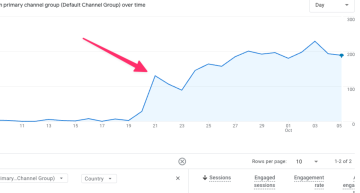
Google Analytics isn’t the center of the universe anymore. Privacy laws, cookie restrictions, and AI search rerouting traffic mean you need to track behavior differently.
The KPIs that matter: brand search growth, direct traffic growth, how often AI answer engines cite your pages, time-to-answer (how quickly your content actually helps someone), and conversions driven by helpfulness—not just pageviews. You should still track conversions, bounce rate, and page engagement directionally. But drop the outdated stuff: raw impressions, vanity metrics, and “sessions” without any context around them.
Search Console is still essential, but now you also need AI search analytics tools, on-site search tracking, and ways to map first-party user journeys. The goal isn’t just knowing how many people visited—it’s understanding how helpful you were and whether AI is amplifying your content. Track what actually moves the needle.
9. Marketing Automation Must Feel Human Again
People can tell when a bot wrote a drip campaign, and they’re tired of it. Your edge in 2025 is offering value that feels handcrafted—use segmented flows instead of blasting everyone the same message, and deliver updates tied to actual behavior and interests.
Newsletter opt-ins, lead magnets, and consistent email cadence still work. But here’s where you can level up: add AI-powered chat to your site, but infuse it with your actual tone and expertise so it doesn’t feel generic. Use first-party data to personalize content recommendations based on what people have already engaged with. Build “content playlists” that guide new visitors through your best work in a logical sequence.
The goal is making people feel seen and helped, not automated at. When your communication feels personal and genuinely useful, you stand out in a sea of bot-generated noise.
10. What Always Worked Still Works: Be Useful, Be Clear, Be Trustworthy
The fundamentals outlast every algorithm. People still want clear answers, honest opinions, a human perspective, stories, practical steps, and proof that you actually know what you’re talking about. AI rewards exactly what users reward—there’s no separation anymore between optimizing for search and creating genuinely helpful content. Do right by people, and AI will follow.
A Modern, Practical Checklist for AI-Search Era
Here’s a condensed version of what every site should commit to in the AI-search era:
Do these consistently:
- Create content with real expertise and lived experience.
- Build topical depth, not random posts.
- Refresh your best-performing content quarterly.
- Add structured data and clean internal linking.
- Publish multimodal assets tied to each topic.
- Answer user questions directly and clearly.
- Build a trustworthy brand footprint online.
- Track AI Search visibility, not just traditional rankings.
- Build content that AI can cite, not content that lives only for keywords.
Stay human. It’s your one advantage AI will never have.
Thoughts Moving Forward…
Search has changed. Traffic has changed. How people discover and trust information has changed. But the opportunity hasn’t shrunk. It’s simply shifted to those who are willing to evolve.
So, as we look toward a new year, the question isn’t how to outsmart AI.
The question is how to partner with it, stand apart from it, and create the kind of work that keeps people coming back because it sounds like a real person wrote it.
And that, my friend, still moves rankings.









Leave a Comment